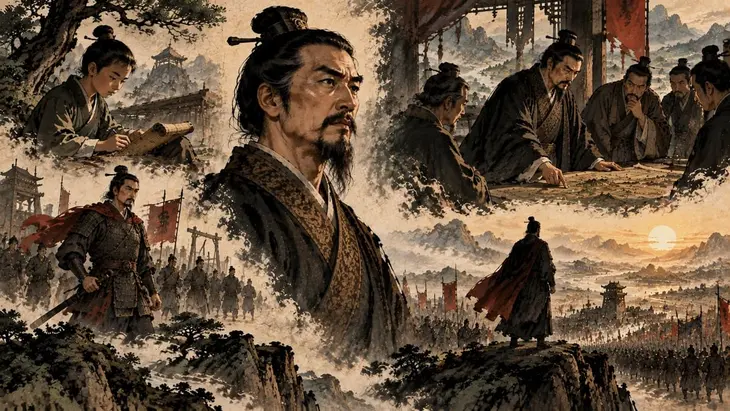
Where did Sun Tzu come from, how did he rise to command, and what do we know about the end of his life? This guide traces his traditional biography through its main episodes. Each stage leads to a focused analysis, with attention to the sources, military attributions, and the gaps that prevent a complete reconstruction of his career.
From his origins to service under King Helu
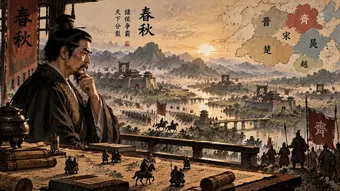
Tradition places Sun Tzu around 500 BC, during the Spring and Autumn period, and links him with Helu, king of Wu. Sima Qian's biographical account, recorded in the Shiji or Records of the Grand Historian , was written several centuries later. For that reason, tracing his life requires distinguishing the period attributed to the figure from the time when his deeds were set down in writing.
The origins of Sun Tzu: between Qi and Wu
Sima Qian presents Sun Wu, known as Sun Tzu, as a man from Qi. Another tradition, recorded in the Wu Yue Chunqiu , regards him as being originally from Wu. The versions differ on a basic point in his biography: his place of origin.
The study of the debate over Sun Tzu's origin compares those attributions and examines the questions around his family and his arrival in Wu. It is worth separating each issue: knowing the place assigned to him by a source is not enough to establish a year of birth, a genealogy, or the circumstances of his military training.
The test before the king and his appointment to command
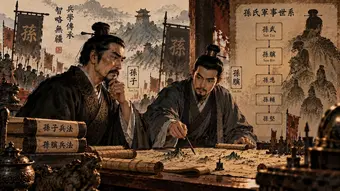
According to Sima Qian, Helu wanted to test his knowledge by asking him to train the women of the palace. The account includes the execution of the two group leaders for disobedience and ends with Sun Tzu's appointment as a general. This is how the text explains his rise to command.
In the story of Sun Tzu and the concubines the sequence of the episode and the tension it creates between the sovereign's orders and military authority are examined. Reading it makes it possible to study how the image of the commander is built, without taking the anecdote as independent confirmation of what happened or turning the punishment described into a recommendation.
The campaigns of Wu and the end of his life
Boju and the victories attributed to Sun Tzu
In 506 BC, Wu defeated Chu at the Battle of Boju and reached its capital, Ying. Sun Tzu's connection with these events needs a clarification: the Shiji links him with the successes of Wu, while the Zuo Zhuan does not mention him in its account of the campaign. The existence of the conflict and his personal involvement do not enjoy the same documentary support.
The analysis of the campaign of Wu and the Battle of Boju distinguishes the narrated operations from the claims about his participation. To understand the setting of that campaign, the conflict between Wu and Chu examines the relations between the two states and the course of their clashes.
A victory for Wu does not by itself prove that Sun Tzu directed every manoeuvre. Nor does it allow us to conclude that he was an unbeaten general: that claim would require identifying his campaigns, establishing his responsibility for them, and verifying their outcomes. The reputation handed down to us does not replace that documentation.
What we know about his later years
Sima Qian's brief biography does not explain when or how Sun Tzu died. When moving on to Sun Bin, the text notes that he lived more than a century after his death, but it does not narrate the end of Sun Wu's life. His cause of death and the circumstances of his later years remain unspecified.
The question of what we know about Sun Tzu's death requires separating that silence from the hypotheses that try to fill it in. A withdrawal, an execution, or a death at court would each need its own evidence; they should not be presented as equally substantiated alternatives simply because they are possible.
How to distinguish biography from legend
Reading note: a narrative is not the same as independent proof.
The fact that a source recounts an episode tells us the version it conveys. To establish what happened, one must check when it was written, where it got its information, and whether independent testimonies exist. The repetition of the same story in later works does not necessarily add new confirmation.
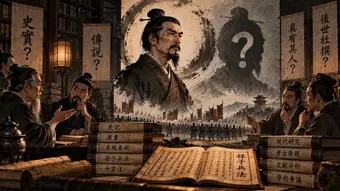
It is also worth separating the existence of the figure, the episodes attributed to his life, and the authorship of the treatise. Accepting or questioning one of those issues does not automatically resolve the others. The debate over Sun Tzu's existence organises this examination of the sources and their interpretations, beyond the biographical sequence of events.
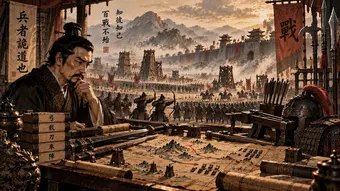
In relating his life to The Art of War , it distinguishes two tasks: interpreting an idea from the treatise and proving that its supposed author applied it in a specific campaign. The resemblance between a narrated tactic and a passage in the book may open up a comparison, but it does not by itself prove Sun Tzu's involvement.