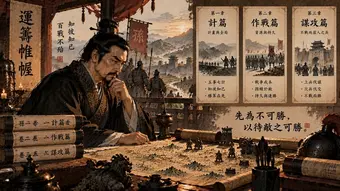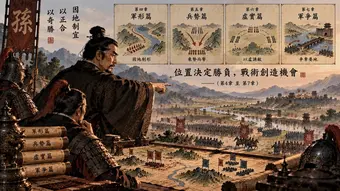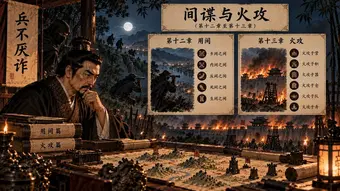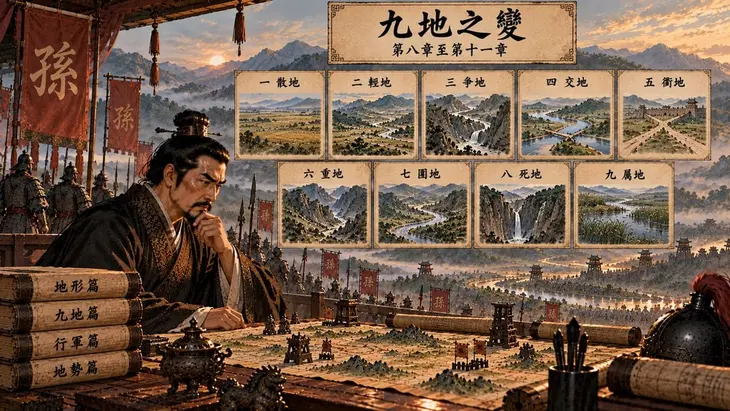
The study of terrain in Sun Tzu links geography with decisions and the situation of the troops. Chapters 8 to 11 deal with different problems: adapting the plan, reading signals, assessing topography and understanding pressure on the army. This guide lets you move through them without mixing up their classifications.
Four chapters for examining the environment and the situation
A description of the place is not enough to explain what an army can do. It is also necessary to consider what information command has, how it interprets change and what possibilities of movement the troops still have. Chapters 8 to 11 of The Art of War divide those questions across different themes.
| Chapter | Reading theme | Main question |
|---|---|---|
| 8 | Adaptation and command risks. | What conditions require a decision to be reviewed? |
| 9 | Marches and observation of signals. | What is observed and what is inferred from it? |
| 10 | Six types of terrain and command responsibility. | What depends on the environment and what on leadership? |
| 11 | Nine situations of the army. | How are movement, pressure and collective behaviour related? |
The nine variations in chapter 8, the six terrains in chapter 10 and the nine situations in chapter 11 belong to different developments. The coincidence of a number or the use of the word terrain does not allow one classification to be substituted for another.
Command adaptation and reading signals
Chapter 8: when to review the plan
Flexibility raises a question of judgement: recognising when a decision no longer fits the circumstances. Keeping a plan solely because it was approved earlier would prevent examination of the information that emerges during its execution. Changing it without an identifiable reason is not, in itself, an adaptation either.
The reading of command flexibility in chapter 8 links those exceptions with the commander’s risks. The analysis looks at how certain dispositions can affect a military decision; it does not turn the categories of the treatise into psychological diagnoses.
Chapter 9: observing is not the same as knowing
Chapter 9 brings together observations about the environment, movements and the opponent’s behaviour. To follow its reasoning, it is worth separating the observed signal from the explanation that is proposed. An observation needs interpretation and may leave questions open.
The study of signal reading in chapter 9 examines those links within the military context of the text. Its examples should not be turned into infallible rules for guessing intentions from a single gesture.
Topography and the army’s situation
Chapter 10: terrain and command responsibility
Chapter 10 addresses the characteristics of terrain alongside problems attributable to leadership. Separating the two levels avoids explaining any outcome through geography alone. The conditions of the place and the decisions made in response to them require their own examination.
The analysis of the six terrains in chapter 10 develops the classification and distinguishes it from the causes of defeat related to command. The question shifts from what characteristics a space has to how action is taken within it.
Chapter 11: the nine situations and collective pressure
Chapter 11 broadens the reading to the army’s circumstances and its scope for action. The interest is not limited to describing geographic features: it also reaches the relationship between possibilities for movement and the conduct of the troops.
The explanation of the nine situations in chapter 11 places the so-called mortal terrain within that argument. Analysing how an extreme situation is described is not the same as recommending that danger be created to motivate a team or force its obedience.
The previous section, positioning and tactics: chapters 4 to 7, deals with the disposition and movement of the forces. The reading continues with fire and intelligence: chapters 12 and 13. You can consult the full journey in the The Art of War guide.