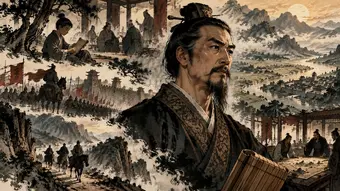
Virtues of command as questions about management
Comparing the commander with a manager makes it possible to examine how decisions are made and responsibilities assumed. The exercise loses precision when it turns any preference of the person in charge into an unquestionable order. In an organisation, explaining objectives and listening to information from the team are part of the issue being analysed.
Wisdom, sincerity, benevolence, courage and discipline are the five virtues this reading organises. As a business adaptation, wisdom can be linked to recognising what information is missing; sincerity, to communicating what is known and what remains uncertain. Benevolence directs attention to the treatment and support each person receives.
Courage can be examined through the willingness to make a difficult decision and answer for its consequences. Discipline, through the clarity and consistency of work agreements. These interpretations do not equate bravery with recklessness or discipline with arbitrary harshness.
The analysis of the five virtues of the business leader develops observable behaviours and management tensions. Naming a virtue does not prove it is practised: it is more concrete to examine how a change was explained, a problem was dealt with or a decision was corrected.
Autonomy with clear limits and review of work
Delegating requires clarifying what a person can decide, within what limits, and when they need to consult. Assigning a task while reserving approval of every detail creates a contradiction: responsibility for the result is assigned without specifying the room to intervene in it.
In a hypothetical example, a project manager can reorganise the tasks of their team as long as the agreed scope is maintained. If a request appears that changes that scope, they must pass it on to the relevant person. The agreement distinguishes one operational decision from another that alters the project commitments.
The discussion of how to avoid management micromanagement examines that relationship between autonomy and supervision. Reviewing results, understanding difficulties and asking for explanations is not the same as intervening at every step. At the same time, having autonomy does not remove the obligation to communicate problems and answer for decisions.
Review should also make it possible to change a plan when its conditions are no longer being met. If a dependency is delayed, the team needs to know who can reorganise the work and what consequences must be communicated, rather than maintaining a sequence that no longer responds to the situation.
To compare this adaptation with a reading of the treatise, the flexibility of command in chapter 8 provides the overview of plan review and the risks of leadership. The comparison does not turn a company’s governance into a military relationship between sovereign and general.
Care, discipline and questions for reviewing the team
Care can be made concrete by listening to difficulties, checking the availability of resources and dealing with mistakes without humiliation. Discipline can be expressed through understandable expectations and consistent review criteria. In this proposal, both issues are examined together: supporting a person does not require leaving their commitments undefined.
Suppose a delivery is delayed for a second time. Before attributing it to a lack of commitment, the person in charge in the example reviews the agreed scope, changes in priority and outstanding dependencies. Afterwards, they speak with the person involved to distinguish what needs correcting and what support should be provided.
The reading of care and discipline in talent management develops that balance without presenting employees as minors who need supervision. Fair treatment does not require paternalism, and an isolated management practice does not guarantee that a person will choose to stay with the company.
These questions make it possible to review concrete team agreements:
- Does each person know what result is expected and what decisions they can make?
- Can they communicate an error or difficulty without it automatically being confused with a lack of commitment?
- Are priorities reviewed when the requested work changes?
- Are differences in judgement explained when assessing similar situations?
Sun Tzu’s reading applied to leadership raises questions about the judgement of the person in charge, the decision-making room of managers and the treatment of the team. This guide connects the virtues of command with autonomy and coordination, through management examples that do not literally transfer the relationship between general and soldiers.
Virtues of command as questions about management
Comparing the commander with a manager makes it possible to examine how decisions are made and responsibilities assumed. The exercise loses precision when it turns any preference of the person in charge into an unquestionable order. In an organisation, explaining objectives and listening to information from the team are part of the issue being analysed.
Wisdom, sincerity, benevolence, courage and discipline are the five virtues this reading organises. As a business adaptation, wisdom can be linked to recognising what information is missing; sincerity, to communicating what is known and what remains uncertain. Benevolence directs attention to the treatment and support each person receives.
Courage can be examined through the willingness to make a difficult decision and answer for its consequences. Discipline, through the clarity and consistency of work agreements. These interpretations do not equate bravery with recklessness or discipline with arbitrary harshness.
The analysis of the five virtues of the business leader develops observable behaviours and management tensions. Naming a virtue does not prove it is practised: it is more concrete to examine how a change was explained, a problem was dealt with or a decision was corrected.
Autonomy with clear limits and review of work
Delegating requires clarifying what a person can decide, within what limits, and when they need to consult. Assigning a task while reserving approval of every detail creates a contradiction: responsibility for the result is assigned without specifying the room to intervene in it.
In a hypothetical example, a project manager can reorganise the tasks of their team as long as the agreed scope is maintained. If a request appears that changes that scope, they must pass it on to the relevant person. The agreement distinguishes one operational decision from another that alters the project commitments.
The discussion of how to avoid management micromanagement examines that relationship between autonomy and supervision. Reviewing results, understanding difficulties and asking for explanations is not the same as intervening at every step. At the same time, having autonomy does not remove the obligation to communicate problems and answer for decisions.
Review should also make it possible to change a plan when its conditions are no longer being met. If a dependency is delayed, the team needs to know who can reorganise the work and what consequences must be communicated, rather than maintaining a sequence that no longer responds to the situation.
To compare this adaptation with a reading of the treatise, the flexibility of command in chapter 8 provides the overview of plan review and the risks of leadership. The comparison does not turn a company’s governance into a military relationship between sovereign and general.
Care, discipline and questions for reviewing the team
Care can be made concrete by listening to difficulties, checking the availability of resources and dealing with mistakes without humiliation. Discipline can be expressed through understandable expectations and consistent review criteria. In this proposal, both issues are examined together: supporting a person does not require leaving their commitments undefined.
Suppose a delivery is delayed for a second time. Before attributing it to a lack of commitment, the person in charge in the example reviews the agreed scope, changes in priority and outstanding dependencies. Afterwards, they speak with the person involved to distinguish what needs correcting and what support should be provided.
The reading of care and discipline in talent management develops that balance without presenting employees as minors who need supervision. Fair treatment does not require paternalism, and an isolated management practice does not guarantee that a person will choose to stay with the company.
These questions make it possible to review concrete team agreements:
- Does each person know what result is expected and what decisions they can make?
- Can they communicate an error or difficulty without it automatically being confused with a lack of commitment?
- Are priorities reviewed when the requested work changes?
- Are differences in judgement explained when assessing similar situations?
The answers do not form a score on the leader’s quality. Their function is to identify a practice that can be observed and reviewed. To address other decisions, such as which activity to develop or where to concentrate resources, the relevant overview is Sun Tzu applied to business.
The modern applications of Sun Tzu make it possible to relate team management to other areas. Keep the distinction between an idea from the treatise and the work agreement proposed today: the latter should explain its objectives, limits and responsibilities.